Thursday, September 6, 2012

Views from Sugar Loaf Mountain


Trem do Corcovado

cog train to Cristo Redentor


view of Lagoa Rodrigo de Freitas and Jockey Club from train


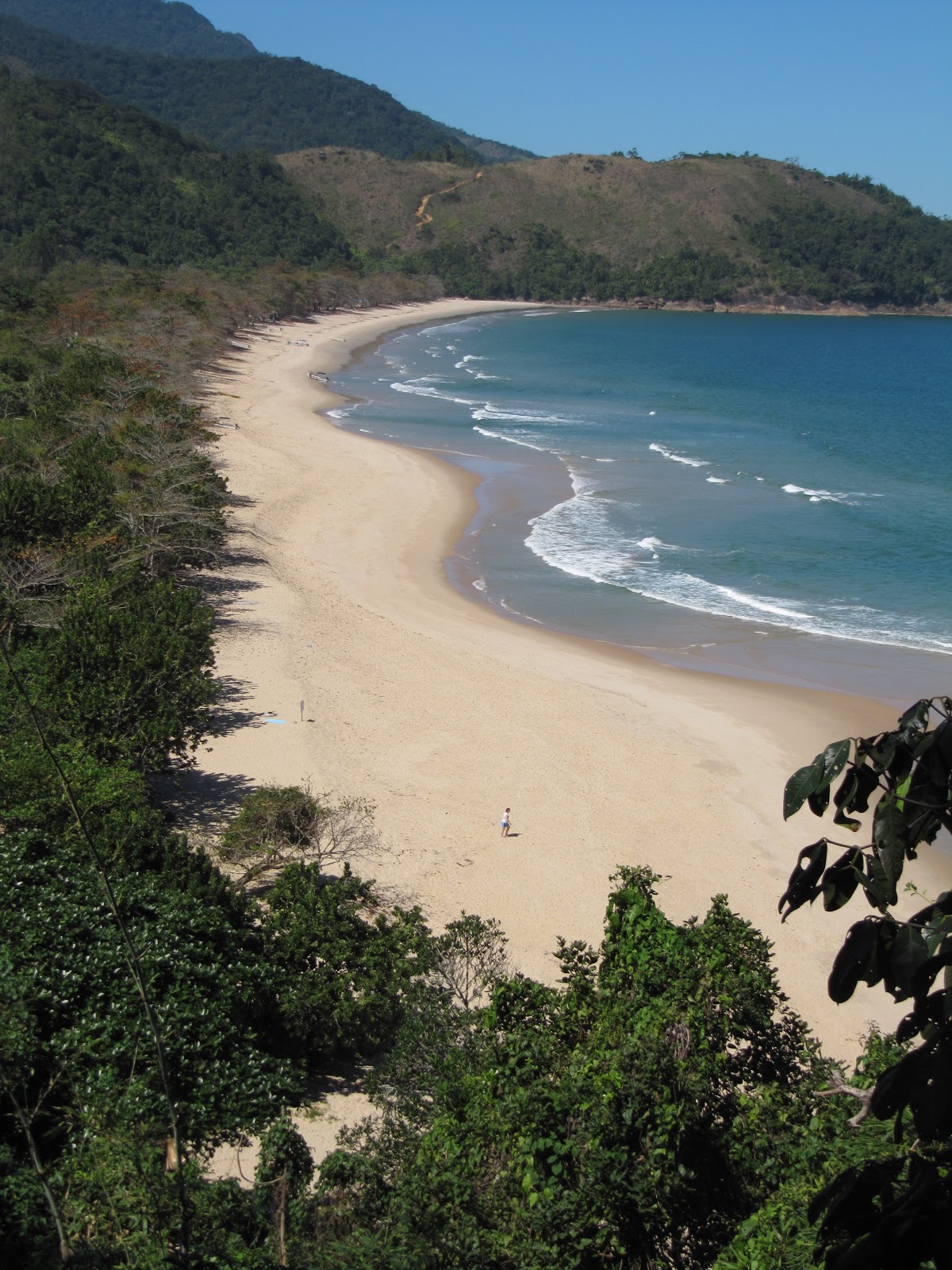
Hiking in Paraty

Laranjeiras to Praia do Sono
(photos to accompany Peter's post)


Brasilia and the Limits of Planning

(by Peter Hartman)

Brasilia, Brasil's national capital, was planned and built on the tabula rasa of the empty landscape of the Planalta Central several hundred miles inland from the existing capital at Rio de Janiero. A bold experiment. A complete brand-new city, master-planned along rational, modernist principles that would preclude the problems of older, organic more chaotic cities with their problems of slums, congestion, unemployment. It is the largest city in the world that did not exist at the beginning of the 20th century.

The city is eminently readable. Laid out along two intersecting major axis – the E-W monumental axis that contains all the major government ministeries, their administrative support buildings, culminating in the legislative chambers and presidential palace. The N-S road axis contains the residential superblocks of individual 3-to6 story housing buildings surrounded by open space. Corbusian towers in a park meet Ebenezer Howard's garden cities. Neighborhood commercial strips serve every four superblocks.

All of the buildings are widely spaced with the exception of the commercial strips. A rudimentary public bus systems assures almost exclusive use of private automobiles. This  gives an eerily empty feeling to the residential areas. The only pedestrians we saw were a few people going to their cars in the surface parking lots adjacent to the residential buildings. No one was walking along the streets, occupying the planted open spaces between  buildings, or even in the ground-floor residential lobbies. There was, however, what appeared to be a lively social life in the bars and restaurants on the commercial strip. We could imagine that this extended to the other retail establishments as well but which, being a Sunday, were closed.

Central Brasilia has not changed since its inception in the 1960s. Its original form and function is jealously guarded by several layers of bureaucratic oversite that must approve any change or addition to the built environment in the city's original “pilot plan” area. In additon, in 1987 Brasilia was designated as a UN World Heritage Site, adding aonther layer of preservationist protection.

But Brasilia has continued to grow as civil service positions expanded along with the government and migrants arrived to staff the tertiary service sector. The original pilot plan area has a population of 200,000 in a metroplotan region of now over 3 million. The consequences of this imbalance were immediately clear as we toured the periphery where entire satellite cities have popped up in the endless plain consisting of cheek-by-jowl 30-to-40-story residential buildings. No towers in a park here. Brasilia has spawned all the traditional organic, dense, messy urbanism seen the world over. And as the pilot plan area still contains the vast majority of jobs, the extensive roadways around the capital are as jammed and impassible at rush hour as any city in the world.

Finally, even the original pilot plan area of Brasilia has changed. But paradoxically it has changed by staying the same. I was struck by the fact that even our guide, Professor Frederico Holanda of the University of Brasilia, said he lived in a new gated community about 30 km from the capital because he could not afford a residence in the pilot plan area. The original concepton of the  self-contained community had given way to an exclusively upper-income community. Everyone else lives on the periphery and endures lengthy automobile commutes. As the physical form of Brasilia has remained the same, the socioeconomics have dramatically shifted towards upper-income households, not what was envisioned in the original plan at all. So Brasilia has changed as much as it has stayed the same, indeed precisely because it has stayed the same. Today's solutiions to yesterday's problems sow the seeds of tomorrow's challenges.      

Tuesday, September 4, 2012

Peak Experiences and Lasting Impressions

A note from your blog concierge: I've asked everyone in our great group, including the non-bloggers, to share a few sentences or paragraphs on their favorite experience(s) and/or important reflections on our amazing journey.  I'll be posting these as they come in.

From Jackie Yang:

Many thanks to Rob for organizing this trip!  The itinerary was perfect with a great mix of cities and sights.  The meetings and tours were all really fascinating and informative.  I had a wonderful time!

Hmm, it is really difficult to pick the best experience, as the whole trip was a great experience overall for me.  Warmth of the people, tasty food (however meaty), great transportation, two of the wonders of the world, etc.?  

From Darrell Van Ness:

Great trip; excellent planning by Rob and his helpers; superb execution; and outstanding friendliness within the group.

We all learned something about urban planning but I discovered an alternative history of aviation.  Chance reading of a plaque in the Curitiba airport led to discovery that Brazil considers itself to be the founding nation for powered flight.  Alberto Santos-Dumont, a faithful son of Brazil, indeed flew an engine powered, steerable balloon before the Wright Brothers put their winged craft into the air.  And Santos-Dupont quickly followed the Wright invention with a heavier-than-air design of his own. 
Arrival home:  Drivers stopped at signs and traffic lights; pedestrian used crosswalks.  And I rambled through a house filled with more furniture and clothing than anybody needs.  Alas,  three days after the return, orderly traffic and excessive personal property, including four vaccuum cleaners and three TVs,  now seem normal. 
Highlight for me, other than Brazil:  Lee Eastwood's stories of other travels, including a ride in an airplane in Africa equipped with school bus benches rather than airline seats.  And, of course, Alex's account of the "fiercest warrior" (himself) in Amazonia.


From Scott Ruhland:

For me, I think I will remember a few things as the stand outs....the warmth and friendliness of the Brazilian people. I had the opportunity to meet some locals and all were kind, curious and genuine towards me as an American.
Feelings of being safe and not threatened at all, given the amount of warning you get as far as traveling to Brazil. Brazil gets some bad press about crime, and I'm sure most is well deserved. Call us lucky, call us smart, call us intrepid, but I never, even as I'm walking around alone in the wee hours, felt unsafe, uncomfortable or threatened, and that was a pleasant surprise to me.
And finally, I think the contrast and similarities between cities we visited was amazing. Each has their own style, flavor and atmosphere. Paraty and Ouro Preto were similar in alot of ways, in others not at all. The contrast between two big cities like Brasilia and Curitiba is fascinating. Sao Paul is a beast, the lion of South America, as Ive heard it called, and Rio is like its mischievous (and beautiful) little sister.  All were beautiful in their own way but at the same time gritty and a little rough around the edges. It was the perfect blend and I commend us all for planning a great itinerary, the time and effort we spent was so worth it.
It goes without the saying that the planning meetings were all excellent and fascinating. I think we scored big time on those. Special thanks to Vincent of course.
And of course, special thanks to Rob, the cat herder. Not easy to organize and manage a group of planners like us, but we know all what an excellent job he did!
 
From Eileen Whitty:

Sugarloaf Mountain Visit
image001.jpg

In Rio de Janiero, Sugarloaf Mountain rises steeply out of the city. It’s named for its unique shape that resembles a traditional form of refined sugar used in the 19th century. To reach the summit, we took two cable cars mostly straight up from the visitor’s center. The first ascended to the shorter Morro da Urca, 220 meters high. The second car ascended to Pão de Açúcar. The Italian-made bubble-shaped cars upgraded in 2008, offer passengers 360-degree views of the surrounding city. The climb takes three minutes from start to finish.

Because the Mountain is located out on a peninsula in Guanabara Bay, which contains more than 130 islands, views are spectacular and show why the city is so water-oriented. Many hidden beaches and neighborhoods that have private marinas are now visible and beckoned to those walkers and swimmers among our group.

The Mountain is also a popular urban rock climbing destination and many climbers were visible to us as we ascended in the cable cars.

Because of the views from this site, this is my One Memorable Experience in Brazil.
*************

and from John Carson:


Brazil was, without question and by far, the most remarkable trip we have taken.


The trip was an unending parade of unforgettable experiences: the planning meetings in Sao Paula and Curitiba, the South-Sea-like schooner cruise, the cog rail way ending in the summit of Corcovada Mountain and Christ the Redeemer blessing Rio, the aerial tram to the summit of Sugarloaf, the spectacular train ride through the costal mountains; all would have been the highlight of a "mere mortal" trip but...


for me, the most unforgettable moments were the experiences in the Iguazu National Park. The walks, the vistas, and the magnitude of the natural setting exceeded anything I could have imagined . Experiencing the falls went beyond appreciating spectacular beauty. From the tiny Swifts, fearlessly flying through the falling water to safely roast, to the grand vista's, to the thundering power of the Devils Throat, the grandeur of the falls elicits powerful spiritual and emotional responses from within one's being.
Just want to also share a totally qualitative feeling regarding the social atmosphere of Brazil (the country)
Having been a small business owner and also a non-profit organization director who has had a positive experience in the US socio-economic environment, I have (and should have) strong positive feelings about the capitalistic-democratic system we have in the US (after all it has been good to Carolyn & me.)
Being ignorant of the socio-economic character of Brazil, I nevertheless have experienced a feeling that there is a slightly different "sense of community" that may exist. The source of this community is beyond my analysis but nevertheless it has opened a small seam in the window of my opinion.
.
Socio-economic approaches have positive and negative elements, and we probably had a very limited view of the negative. However, I still felt, especially in the Sao Paula and Curitiba planning meetings, a strong sense of great effort being invested to improve the environment for all citizens. For some reason the emotional tone of the presentations went beyond posturing and seemed to reflect honest hopes and a commitment to work for an improved quality of life for all.
Additionally, on the mass transit, on the night of the bike tour, I was impressed by the people's lack of aggressiveness. In spite of the packed bus conditions people were able to get out at their stops. To me, there seemed to be a good sense of "we're in this together and we'll do our part to make it bearable". On more than one occasion, riders offered their seat to me (ok, ok, I know I'm old, but nevertheless...impressive.)
As a result, for me, the seam that has been opened is that other socio-economic systems have elements that can, possibly, result in a satisfying and supportive environment that "works" for people...
and the associated corollary? Our way remains a work in progress, we can and should continue to labor for a better tomorrow...for all.
But...can we learn from others?...I don't know.

Monday, September 3, 2012


Seven Cities in Seventeen Days: Glimpses of things Brazilian

I write this at the end of my trip but before the warmth of the Brazilian sunshine is washed away by the gentle fog of the Pacific and the details of everyday life. As I observed cyber silence during the travels, I offer here random observations and thoughts rather than real time narrative.

People:
For me it has to be the kindness, the openness and the patience of the Brazilian people that will stay with me the most. It started with a gay couple sitting next to me on my flight to Sao Paulo. The delved through my itinerary, gave me suggestions and offered to take me to lunch the next day. By the way, gay marriage is legal in Brazil – the largest Catholic country. Eat that America!

Diversity:
Brazilians come in all colors, shapes and sizes. Our tour guides made it a point to emphasize the “melting pot” created by a mix of immigrant groups (Portuguese, Italians, Japanese, Lebanese, and West Africans) and co-existence of different faiths (Christianity and Islam). But it was difficult to assess whether the divisions along ethnic groups are indeed blurred and whether different faiths are celebrated. Japanese communities apparently continue to send their offspring to Japan for “cultural education” and there seemed to be no signs of Id (the end of Ramadan) celebrations in Sao Paulo or its acknowledgement by our guide. But understanding of such things requires a lot more immersion in the culture than seventeen days can possibly offer.

Food:
Beef and beer rule! Pizza may as well be the national food. Nobody in our group expected to be eating so much pizza. Thanks to the Italian immigrants fine thin crust pizza can be found everywhere and provides a safe option for tourist types weary of their ability of decipher menus in Portuguese and mistakenly getting chunks of meat in various forms.  A cheese and tomato sandwich by definition will include a slice of meat. A tough place for vegetarians but then there are very few places in the world that are culinary havens for the abstainers of flesh.

Feijoada, perhaps the real national dish, a heavy meat stew, typically prepared on Saturdays was delicious at the Casa of Feijoada in Rio. A randomly ordered black bean soup cooked in bacon encrusted with red chilies at Devassa pub was simply delightful.  Brazilians know their coffee – not one bad cuppa was had in seventeen days.  They also know how to keep their beer cold – bottles always showed up in a bucket of ice or as in Ouro Preto in beer bongs (photos to follow).

There was some talk about the “Brazilian paradox” regarding eating and drinking habits within the group. But I will let others elaborate and explain.

The Cities:

The most striking and unexpected feature is the preponderance of high rise buildings in all the Brazilian cities, colonial Paraty and Ouro Preto being the exceptions.  Others have commented on this “verticality” aspect and so I will not elaborate further. I was also impressed by the lack of relative urban poverty everywhere we went. Even at a visit to a favela in Rio people seemed content and nobody was trying to peddle goods to us. Perhaps Brazil is indeed ready to host the next World Cup Football and the Olympics.

Sao Paulo – This city for me was all about the other church of Brazil – futbol! I went to the Museum of Futbol and saw Brazilians enjoying and devouring various features of this very new, contemporary and interactive museum. The visit was followed by going to a local football game. We splurged for good seats and it was worth every dime. To see a live game at close quarters played by professionals is simply nothing short of a 90-minute adrenalin boost.

Paraty – A sleepy colonial town where we spent a lazy day on a schooner relaxing amidst beautiful scenery. Time was spent jumping into the warm waters to swim to small islands, chatting with fellow companions and simply being at peace.

Rio de Janiero – The night life here has got to be among the top three.  Next time in Rio I am packing my party dress and shoes! And I will come prepared with some moves...
Also, jay walkers beware! A few of us saw a pedestrian getting hit by a vehicle. That put an end to any temptations to take a short cut.

Brasilia – I have only two words: Oscar Neimeyer! Oscar, you have created and flourished and now give others a chance.

Ouro Preto – A beautiful colonial town where steep cobbled streets make for arduous walking particularly after a few shots of cachaca (sugar cane liquor).

Curitiba – Visiting this town for planners would be like visiting the Vatican for a devout Catholic. And it did not disappoint. Yes, you can tell a “livable” city when you see one. All the usual elements come together and combine that with the warmth of the people and the energy of their music. A couple of us hooked up with a group of locals who had gathered at a watering hole (an Irish pub) after work. They took us to their club where “Brazilian country” music was being played by an up and coming group – kind of in the Bossa Nova tradition. Hanging with an office crowd after work gave us some insights. It was interesting to observe a woman manager negotiate recreation time with her male employees. Some things in this world will remain the same.

Iguacu Falls – There are waterfalls and then there is Iguacu Falls. The vastness of these falls has to be seen to be believed. Photos cannot do justice. We were told that there have been rare droughts when the falls dried up. Nothing would freak me out more to see the faucet turned off over these beauties.

There is so much more than what has been shared above.
But if all could be written then why would one travel at all.